
You’ve just finished cleaning your bathroom. The surfaces are wiped down, the sink is rinsed, and everything smells fresh. But somehow, the mirror still looks cloudy, and the taps are streaky.
Hard water has a way of leaving its mark, especially on shower doors and taps, and over time, those faint spots turn into stubborn mineral build-up.
Fortunately, clearing these stains away doesn’t require expensive products or fancy tools. With the right technique and a few everyday essentials, you can break down the residue and bring back the shine.
What Are Hard Water Stains?
Before you go scrubbing everything in sight, you need to understand what you’re dealing with.
Hard water contains high levels of dissolved minerals, mainly calcium and magnesium. When the water evaporates, those minerals don’t go with it. They stay behind, leaving dull, white, crusty deposits on whatever surface they have landed on.
In the UK, hard water is particularly common in the South East and East of England, where chalk and limestone are abundant underground. So if you’re battling these stains regularly, it’s not a reflection of your cleaning habits.
Glass and metal surfaces are especially vulnerable because they don’t absorb water. The droplets simply sit on top and dry out, leaving their mineral calling card behind.
Gather What You Need
There’s no need to rush out and buy expensive specialist sprays. The most effective solutions for hard water stains are cost-effective, and you likely already have them in your kitchen cupboard.
Here’s what to grab before you start:
- White vinegar. This is your most effective weapon against mineral build-up and limescale.
- Baking soda. It provides gentle abrasion, which makes it especially useful for metal surfaces.
- Warm water. Ordinary tap water works perfectly well here.
- A spray bottle. This helps you apply solutions evenly without soaking the area.
- Microfibre cloths. They’re soft enough to prevent scratching but effective enough to lift residue properly.
- A non-abrasive sponge. This gives you a bit of extra scrubbing power without damaging the surface.
Skip anything rough, like steel wool or harsh scouring pads. You might get rid of the stain, but you’ll also leave tiny scratches behind, and those will become magnets for even more grime—not exactly the upgrade you’re going for.
Make Glass Surfaces Gleam
If there’s a surface that refuses to hide hard water, it’s glass. Shower screens and bathroom mirrors display every streak like it’s breaking news. Thankfully, they also respond really well to a simple vinegar solution.
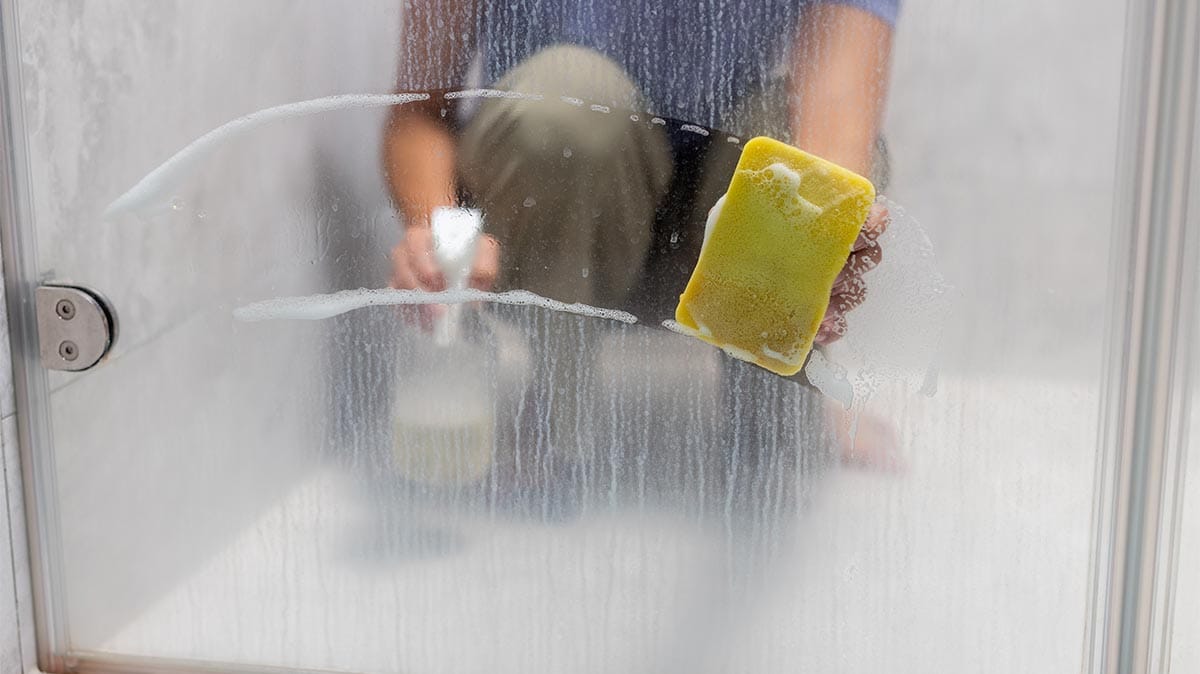
Mix equal parts white vinegar and warm water in your spray bottle. Give it a shake, then spray it generously across the stained area. Don’t be shy with it; full, even coverage is what you’re going for.
Leave it to sit for 10 to 15 minutes. This is where the magic happens. The acidity in the vinegar will break down the mineral deposits, loosening their grip on the glass, so you don’t just end up pushing them around later.
Once the time is up, take your microfibre cloth and wipe the glass in gentle circular motions. You’ll see the haze start to lift almost immediately.
Finally, rinse the surface thoroughly with clean water, then dry it completely with a fresh, dry cloth. Don’t skip that last step, since leaving the surface wet will allow new mineral deposits to form.
Refresh Your Metal Fittings
Metal taps, showerheads, and sink fixtures need a slightly different technique. Vinegar works here too, but for anything with persistent build-up, a baking soda paste tends to be more effective.
Mix baking soda with just enough water to form a smooth, spreadable paste. It should hold its shape instead of being runny or crumbly.
Apply it directly onto the stained metal, making sure the affected areas are well coated. Let it sit for 5 to 10 minutes, then use a soft cloth or non-abrasive sponge to scrub in small circular motions.
The mild abrasiveness of the baking soda will lift the mineral deposits without scratching the metal underneath.
Rinse everything off well with warm water afterwards, then dry the surface with a soft towel. This is non-negotiable. Leaving moisture on metal surfaces, especially chrome, is basically an open invitation for new stains to move straight back in.
Target What’s Left
Sometimes one round just isn’t enough. If the build-up has been layering itself on for months, it may need a second pass. That’s normal. You’re dealing with minerals that have basically settled in and unpacked.
If a patch on glass is still clinging on, step it up slightly. Soak a folded microfibre cloth in undiluted white vinegar and press it directly onto the area.
Let it sit there for 20 to 30 minutes before wiping it away. Giving the vinegar longer contact time allows it to break down thicker deposits more effectively, so you’re not just scrubbing at something that isn’t ready to move.
For metal surfaces, apply a fresh layer of baking soda paste and leave it for 10 to 15 minutes. Then, scrub again with slightly firmer pressure.
That said, if you’re working with antique mirrors, specialist fittings, or surfaces with delicate finishes, it’s better to find a cleaner who knows how to handle them without causing damage.
Stop Stains from Coming Back
You’ve done the hard part. Now, let’s make sure those mineral deposits don’t move back in when you’re not looking.
Here’s what helps:
- Use a squeegee after every shower. Spend 20 seconds running it over the glass to remove water before it dries and leaves mineral deposits behind.
- Dry your taps and fixtures after use. Wipe them down with a clean, dry cloth to prevent water spots and keep the finish looking polished.
- Keep humid spaces well-ventilated. Good airflow helps moisture evaporate faster, reducing the time minerals have to settle and cling.
- Apply a water-repellent treatment to glass. This creates a barrier that makes it harder for deposits to stick and easier to clean next time.
- Consider installing a water softener. If you deal with the minerals at the source, you’ll save yourself trouble across the board. Your fixtures will stay clean, and your appliances and plumbing won’t work overtime.
Conclusion
It turns out that the only thing standing between you and sparkling surfaces was knowing the right method, and now you’ve got it.
So, grab your ingredients and give our hacks a try today. Your taps, shower screen, and bathroom mirror are all about to look considerably better than they did this morning.