


Bed frame and mattress
A new bed can totally change the look of your bedroom, but choosing the right frame isn’t just about picking out a new foundation and headboard. Bed frames come in a wide variety of shapes and sizes, and the frame you choose will impact the amount of storage space you have, how easily you can make your bed, how the room will look, how the frame will support your mattress and much more.
If you’re shopping for bedroom furniture in Wyoming, MI, planning your room layout before choosing a bed frame can help you find an option that fits both your space and your everyday needs.
Plan the Room Around the Full Frame
Measure the Entire Bed
The size of your mattress is important, but that’s only one aspect of your new bed you should take into consideration when planning a bedroom layout. Once your new bed arrives, don’t forget to measure the outside of the entire bed frame including the headboard and footboard, side rails and posts and any upholstered elements or other decorative pieces. A bed frame that seems compact in product photos may have a headboard, footboard or rails that are wider than you expected.
Think about Traffic Flow
The traffic patterns in your room will help you decide what size and style of bed to buy. Think about how much room you will need:
- To walk from the bedroom door to either side of the bed.
- To access closets, windows and dresser drawers.
- To open under-bed storage bins.
- To get up in the morning and make your bed.
As a rule of thumb, try to leave about 30 inches of space around the bed, if possible. If this isn’t possible, pay particular attention to the area you use to get into and out of bed and the traffic pattern you follow when entering the bedroom.
Consider Other Bedroom Furniture
If you plan to buy a bench or nightstands to go with your new bed, place the items next to your old or current bed and note how much space you’ll have to walk around once the new pieces are in place. A large footboard can eat up even more space. While a low profile bed frame will help a small bedroom feel more spacious, a tall headboard can look beautiful if there’s enough open wall space behind the bed to accommodate it. When comparing bedroom furniture options near Wyoming, MI, consider how your bed frame will work alongside nightstands, benches, dressers, and other pieces you plan to keep or add to the room.
What Must the Frame Support?
Verify Mattress and Frame Compatibility
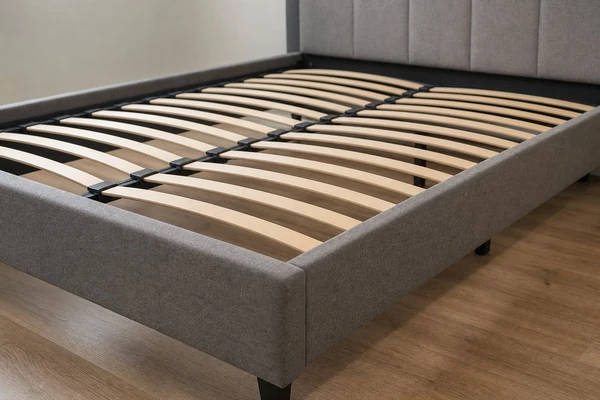
Bed frame support components
Some mattresses call for platform beds or closely spaced slats, while others call for box springs or foundations; GQ compares the frame types at gq.com/story/types-of-bed-frames. Before you make a purchase, carefully read through the mattress care and support instructions and note any special requirements, including:
- Foundation or box spring requirements.
- Maximum and/or minimum distance between slats.
- Leg, center support or weight requirements.
- Other instructions for ensuring mattress support and prolonging mattress life.
Pay attention to exactly what’s included with the bed frame you’re considering, too. Some beds include center support and slats, while others don’t. If you have questions about weight requirements or other support questions, don’t hesitate to contact the frame’s or mattress’s customer service line for answers.
Delivery, Assembly, and Ongoing Care
Delivery Considerations
Measure the narrowest space between doors, tight turns, etc. to ensure the bed frame will fit through doorways, up/down stairs, and through hallways and around handrails. Also consider low ceilings, tight quarters and immovable furniture. In addition to measuring the overall size of the frame, look up the sizes of the boxes and components that comprise the bed. Sometimes smaller boxes or separable components are easier to maneuver than large boxes or preassembled frames.
Think Ahead
Upholstered bed frames add softness to a room and tend to be chunkier and more commanding than open metal or wooden frames, which tend to feel a little more open and airy. Will drawers and lift-up mechanisms have plenty of room to maneuver, or would you be better off with a platform, panel or open bed frame? Are you planning to redecorate down the road or relocate in the future? A bed frame with a removable headboard/footboard may be easier to move in tight spaces.
Don’t Forget the Finishing Touches
Before tightening all hardware snuggly, stand the footboard, headboard, and rails up to ensure everything lines up properly. Assemble the frame on a blanket, carpet, or other protective covering to avoid scratching wood floors. Assemble the frame per the included instructions, keeping hardware organized in a bowl or container. Check periodically to make sure hardware remains tight, slats are even, legs and center supports aren’t wearing down, and wood and metal components aren’t rubbing together.
Cleaning upholstered components? Check out the manufacturer’s recommendations to avoid using any cleaning products that could adversely affect the finish or fabric. When relocating a finished bed frame, avoid dragging. If the frame is especially heavy or outfitted with storage drawers, remove the mattress before lifting with a friend’s help.
Measure Twice…
…and take note of the measurements of your frame, mattress support requirements, and doorways/hallways/stairs before purchasing your new bed frame.