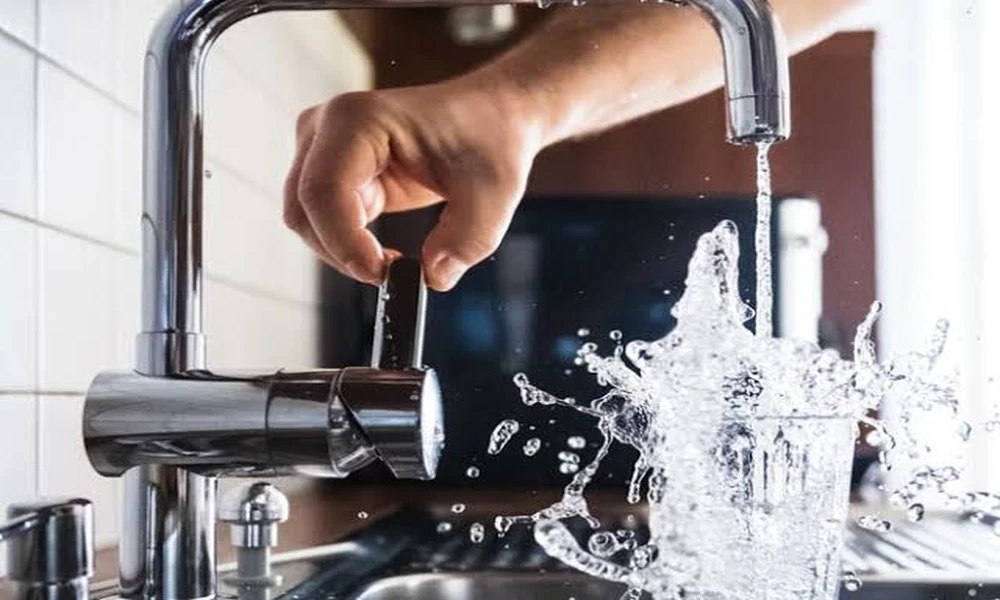

A strong shower feels like a luxury. Water blasts out of the faucet, the hose reaches the far corner of the yard, and nobody complains. But that same force runs through every pipe, valve and appliance in the house, all day and all night, even when nothing is turned on.
Most homeowners only think about water pressure when it drops. A weak trickle gets attention fast. Pressure that runs too high rarely does, because the damage it causes builds slowly. A toilet fill valve fails early. A washing machine hose bursts years before it should. The water heater relief valve starts to drip, and nobody connects the dots.
For Arizona homeowners, this topic carries extra weight. Desert heat, hard water and long supply runs all add strain to a plumbing system. Local crews like Under Pressure Plumbing in Gilbert see the results of unchecked pressure in water heater swaps, fixture replacements and burst supply lines across the East Valley. Knowing your own number puts you a step ahead of those repairs.
What a Healthy Reading Looks Like
Water pressure is measured in pounds per square inch, or psi. According to EPA WaterSense home maintenance guidance, household fixtures work best when incoming pressure sits between 45 and 60 psi. Many homes have a pressure regulating valve, often called a PRV, installed near where the main line enters the house to keep pressure in that range.
City water often arrives far above that window. Utilities push water hard so it can reach hillside homes, fire hydrants and the far ends of the system. Your PRV is the only thing standing between that force and your fixtures. If it was never installed, or if it has worn out, your home could be taking 90 psi or more without any obvious sign.
How to Check Your Own Pressure
Testing takes about five minutes and costs less than a pizza. Here is the simplest way to do it.
- Buy a basic water pressure gauge with a hose thread connection from any hardware store. Pick one with a second “max” needle that records the highest reading.
- Turn off every faucet, shower, sprinkler and appliance that uses water. Make sure the ice maker and irrigation timer are not running.
- Screw the gauge onto an outdoor hose bib, ideally the one closest to the main shutoff or PRV.
- Open the hose bib fully and read the gauge.
- Leave the gauge attached overnight, then check the max needle in the morning.
That overnight reading matters. Demand across the city drops late at night, so pressure in the mains often climbs. A home that reads 58 psi at noon can spike well past 80 psi at 3 a.m.
Making Sense of the Numbers
Below 45 psi
Showers feel weak and appliances may fill slowly. The cause could be a partly closed valve, a failing PRV, scale buildup inside old galvanized pipes, or a hidden leak pulling water away from your fixtures.
Between 45 and 60 psi
This is the comfortable middle. Fixtures perform well, and parts last close to their expected lifespan. No action needed beyond checking again once a year.
Between 60 and 80 psi
Things still work, often impressively well. But rubber seals, valve cartridges and appliance inlet valves wear faster. Water use also climbs, since higher pressure pushes more gallons through every open tap.
Above 80 psi
Most plumbing codes treat 80 psi as the ceiling for household water. Readings above it put real stress on water heaters, toilets, dishwashers and flexible supply hoses. A licensed plumber should look at the PRV or install one.
Why Desert Homes Need Extra Attention
Arizona plumbing faces a few challenges that homes in milder places do not.
Hard water is the first. Minerals settle inside PRVs, valve seats and aerators. A scaled PRV can stick open and let full street pressure through, or stick partly closed and choke the whole house. Many regulators last roughly a decade, but hard water can shorten that.
Heat is the second. Water lines running through hot attics or shallow trenches see big temperature swings, and warm water expands. Inside a water heater, that expansion is even larger.
That leads to a detail many homeowners miss. A PRV turns your plumbing into a closed system, meaning expanding hot water cannot push back into the city main. Without a thermal expansion tank on the water heater, pressure inside the house can rise every time the burner or element kicks on. A dripping relief valve on the water heater is often the first clue.
The Parts That Pay the Price
High pressure rarely causes one dramatic failure. It shortens the life of many small parts at once.
Toilet fill valves start hissing or running on their own. Faucet cartridges begin to drip. Braided supply lines under sinks and behind washing machines bulge and eventually split. Dishwashers and refrigerator ice makers have inlet valves rated for a set pressure range, and constant overload wears them out early. Water heaters may need relief valve replacement more often, and the tank itself takes extra stress.
A burst supply hose behind a washing machine can release hundreds of gallons before anyone notices. That is one reason the EPA encourages homeowners to consider leak detection and flow monitoring devices, which can send alerts or shut off the water automatically when something lets go.
When Low Pressure Is the Real Story
Sometimes the problem runs the other way. A whole house that suddenly feels weak often points to a PRV that has failed partly closed. Weak flow at just one faucet usually means a clogged aerator or a worn cartridge, which a soak in vinegar or a simple part swap can fix.
Pressure that drops slowly over months deserves a closer look. Scale inside aging pipes, a slab leak or a hidden break in the yard line can all show up this way, often alongside a rising water bill.
A Small Number Worth Knowing
Water pressure stays invisible until something breaks, which is exactly why it gets ignored. A cheap gauge and a few minutes at the hose bib tell you more about the health of your plumbing than almost any other quick check. If the number lands in the comfortable middle, you can relax. If it runs high, adjusting or replacing a regulator now costs far less than replacing a water heater, a flooded floor or a cabinet full of swollen particleboard later. Check it once a year, and especially after any plumbing work, and your pipes will have a much easier life.